Simple Photography Tips - Icy Day Photo-Art

Seven Simple Photography Tips for Icy Day Photo-Art
Walk a tad slower than normal or you may regret it both for your body, and for photo-opportunities.
Look for bubbles + cracks first — they’re the built-in pattern makers.
Tiny shifts of angle can make a big difference to texture and light
Fill the frame, stand, crouch, get really low, and avoid distractions
Look for arty additions like leaves
Before you press the shutter, check the borders of your frame. Remove distractions by shifting a tiny amount
Experiment with the light.
So this icy day photo-art blog started from realising that the birds were being denied their normal sources of water, including the bird-bath in our garden.
I thought I'd de-ice it and put fresh water for them, but realised that the way the autumn leaves had landed in the bowl had combined with the structures that the freezing process had produced, to create some great opportunities for art images.
Rather than looking for subjects, it's an opportunity to seek textures as well.
Tiny bubbles frozen in the water add depth and a sense of time held still. Look for clusters, trails, and size changes.
Cracks are like faults in a precious stone, they can reflect light at a different angle, and often add to an image, if not the diamond.
Finding leaves or other 'stuff' provides a completly addition, part shape, part hidden by the ice and bubbles.
Let's stroll through, and I'll share some thoughts and Simple Photography Tips.

Image One - Cracks plus bubbles: the ice does the composition for you, just decide what’s the focal point, and crop accordingly Image One is focused on the Acer leaf, that wonderful 'form'. Placed on one of the 'thirds' but the leaf to the left adds too much weight that side, which the bubbles to the right don't visually counter-balance.
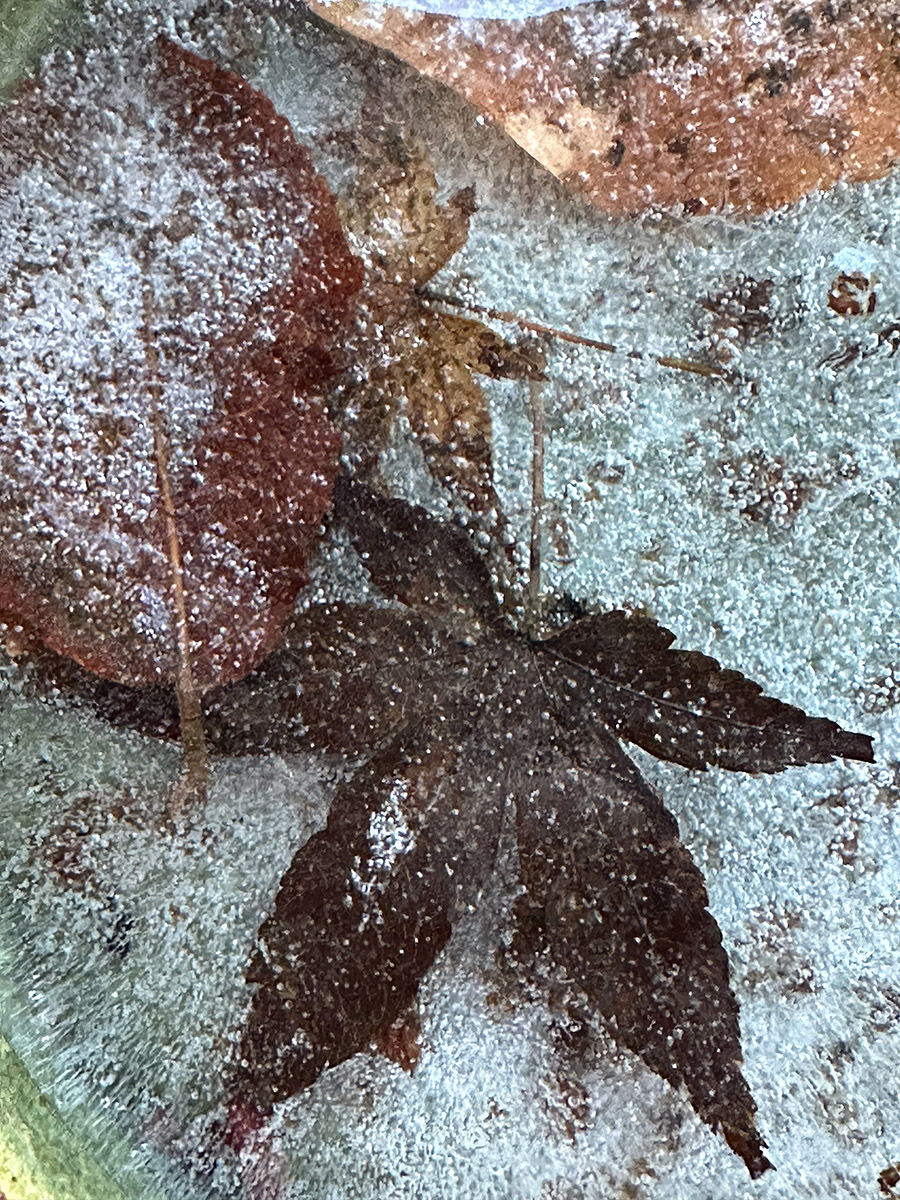
Image Two - Leaves trapped like stained glass. A tiny shift in angle reduces reflections and lets the bubbles show up as texture, not noise. Image Two is where I've included more leaves, which brings more balance to the images, but has a downside in losing much of the texture that the frozen bubble-streams provide.
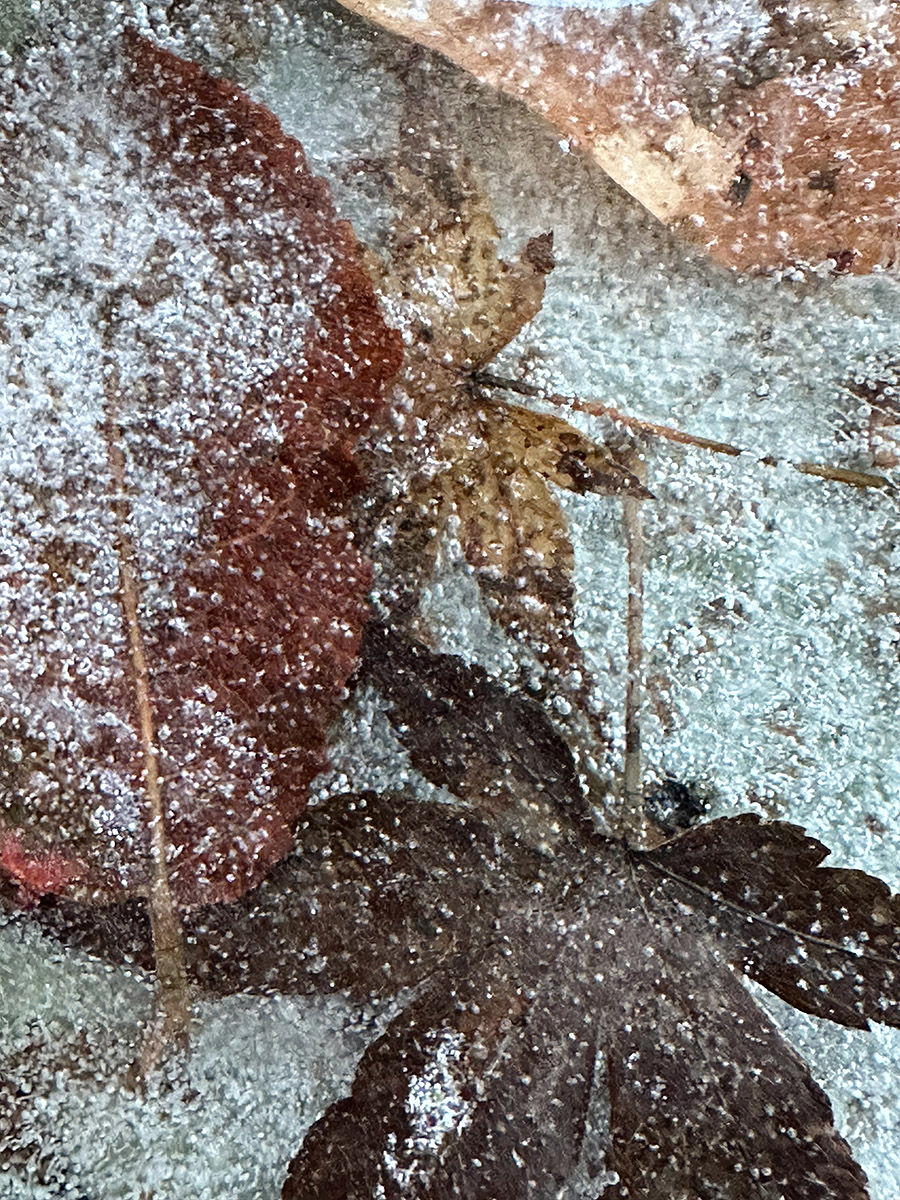
Image Three - A change in composition can be rewarding Image Three is a slightly closer crop, removing all the bubble-streams, but highlighting the indiviual bubbles as white dots, along with mote detail and texture from the Acer leaf.

Images four and five are really similar. The first is taken in such a way that the bubles show more, 'frozen in space'.

Image Five, as the caption says, is taken after the tiniest of movements allows the bubble-streams to show more. I've actually just gone a tad closed which has changed the perspective slightly.

Image Six is where I concentrate on the bubles and the textures that come with them.
The edge of the leaf adds scale and connectivity to the other images.
If you look to the right of the image, just over halfway down, you'll see a couple of larger bubbles, frozen close to the surface.

Image Seven is where I've focused on the bubbles mentioned from the previous picture.
The bubbles were just about to burst when they froze, changing the texture of the ice-surface, and adding a focal point.

Image Eight - ice removed from it's dish and held to the light.
One the ice had defrosted sufficiently (I ran warm water on the back of the dish) it came loose.
Held up to the morning light, the backlighting changes everything, patterns and debris appear, and the whole scene becomes a different variation.

Image Nine, was a variation on Eight, the sun had risen above the bank in the garden, so I held the ice up with the sun directly behind it.
Different image from the same subject.
Which do you prefer?
Icy mornings can be more about patience more than gear.
If you give a scene time to “reveal” itself, you start seeing small offerings nature has already made for you, lines, layers, texture, balance.
Your job is mostly to notice, and honour with yuour images - and there is no right answer.
The next time it freezes, which may not ever happen if you live in certain parts of the world, or be already the case in others.
Spend five minutes, or more, with the nearest patch of thin ice.
Pick one thing; bubbles, cracks, or a single leaf; and take three images: one wide, one close, one abstract. Those three alone will teach you more than scrolling another tutorial ever will.
If you’d like a simple challenge, choose one of my images above and ask: what’s the one thing this picture is really about? Then go and make your own version on the next icy day. If you do, I’d love to hear what you noticed.


Comments