Photographing Bluebells: Depth of Field and Background Choice – Simple Photography Tips by Michael Blyth.

Five simple tips for great bluebell photographs
Pick a clear subject
Check the background carefully
Control depth of field with purpose
Change your viewpoint when photographing bluebells
Create separation between subject and background
It's bluebell time! That visual paradise in an ancient English Woodland. Native to much of western Europe Britain has a significant percentage of the world's population. They are associated with old woodland, existing in large blue carpets under the breaking leaves of beech, oak and other natives, and in places with swathes of wild garlic.
The soft light that is often peculiar to April and May, adds to their visual. appeal.
They are easy to enjoy, but not always easy to photograph well. Their beauty is obvious to the eye, yet in a photograph they can quickly become cluttered, confused, or oddly flat unless you pay close attention to depth of field, background, and viewpoint, or put another way: are not difficult to photograph, but they are surprisingly easy to photograph badly.
I have always struggled photographing bluebells, as I know have many other professional photographers, and my current post mountaineering accident following last years new hip status has meant that for two years running this man has not been able to get down low to do them something of the justice they deserve.
But assuming you're happy to have a look at what I have managed, let's have a look and some thoughts.
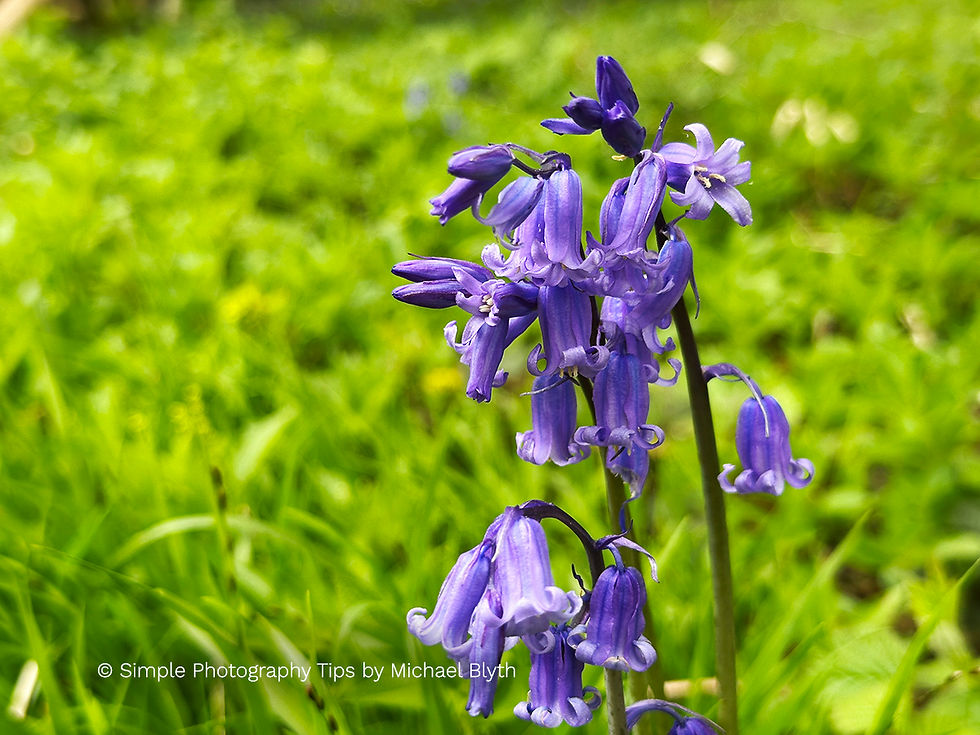
The first set of images is a small group set in a sea of green.
Image One is a semi-close-up of the group, and I've composed the image so that they sit towards the right intersecting third.
The lens used has dropped the background pretty much out of focus. I've also framed the image tight enough that we just have a gentle green backcloth.
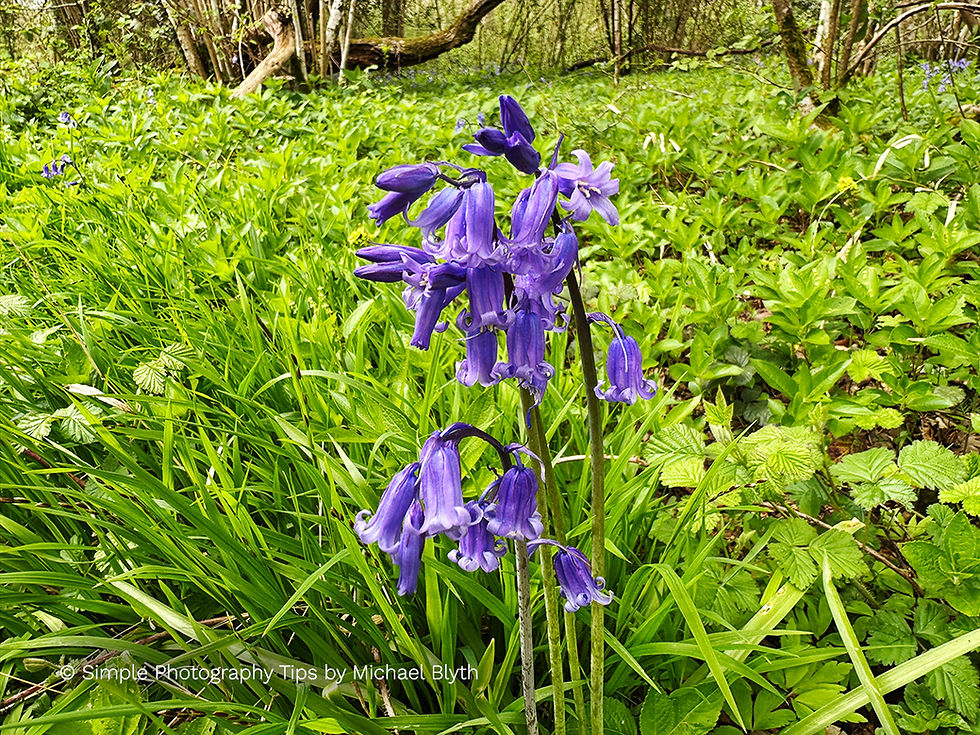
Image Two is the same group but I've moved a couple of steps backwards with the result that the grass, brambles and Dogs Mercury (poisonous to dogs btw as we discoverd when pup did a little grazing) are in focus, and the stands of coppiced hazel form a distant setting and add an environmental placement.
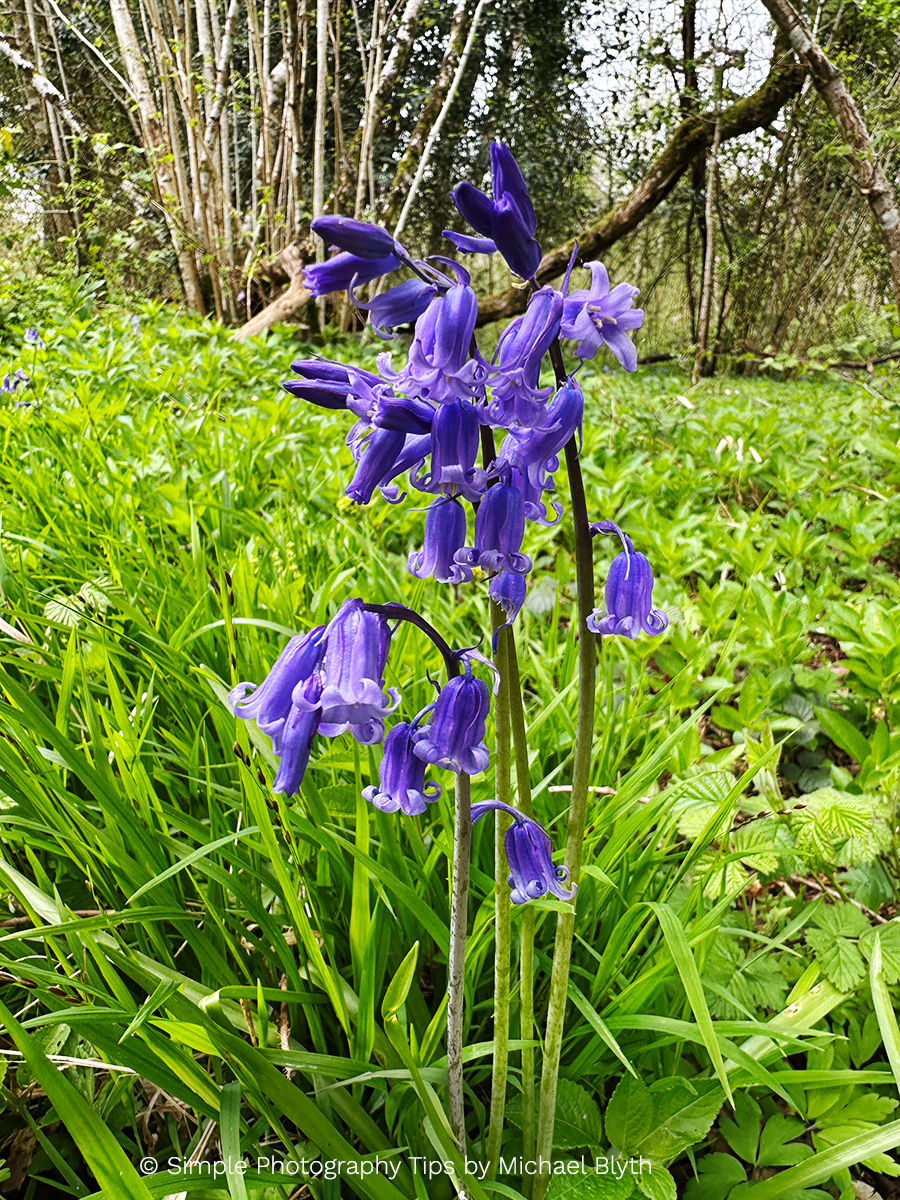
Image Three, is a greater change of perspective. I've moved in, got the lens down lower by turning the phone upside down, and taken a portrait rather than landscape..
The effect has been that the blubells sit in a different space, taking up a greater space, and the portrait view makes them appear taller.
The physical lowering of the lens has then required an upwards tilt - which has brought more of the woodland into the scene.
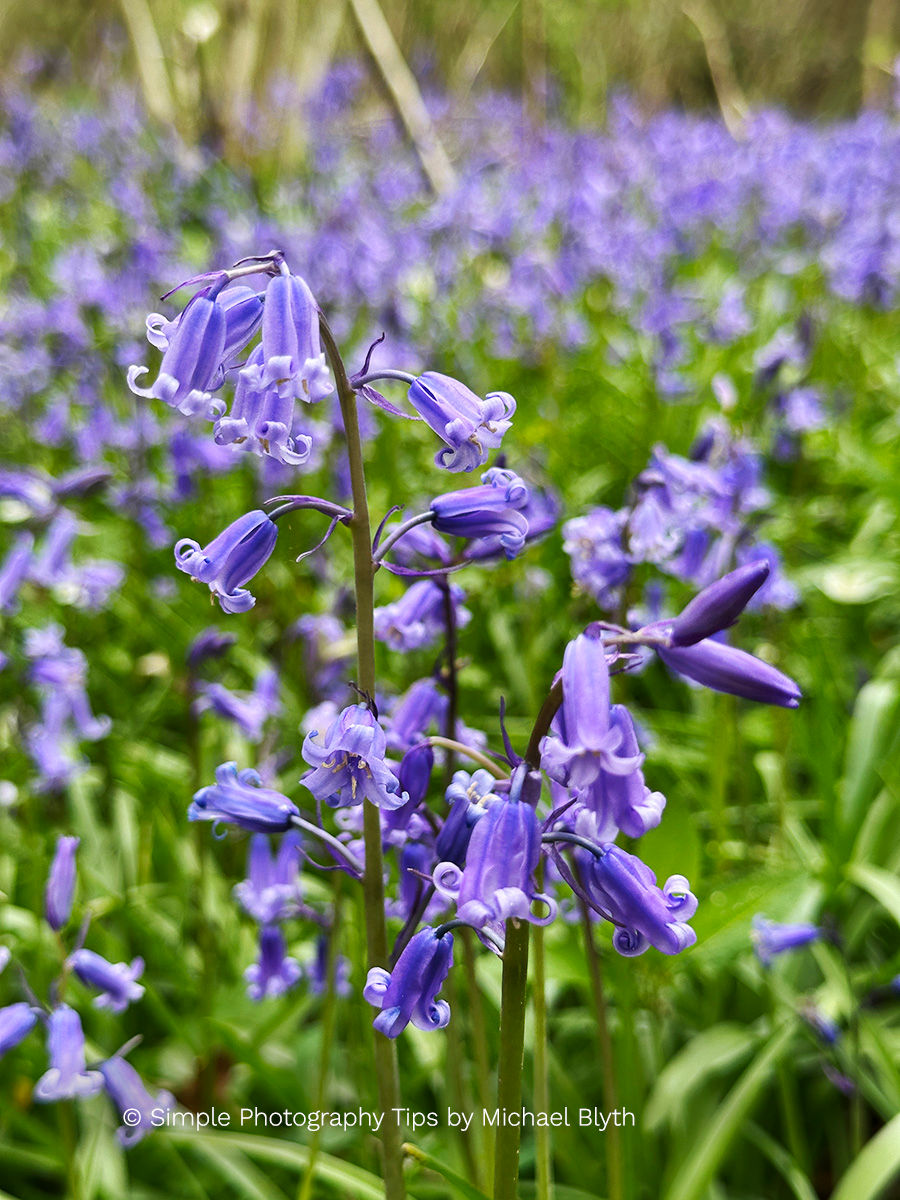
The second set of images makes use of a different background.
One of the awesome things about these beauties is that those seen in ancient woodlands have been doing so for around half a millenia, and occur in great beds.
BTW : 'I'm thinking of organising a woodland walk next year to allow interested subscribers to see and photograph these amazing flowers- if you're interested in going on a waiting list ping me a note using 'contact''. If you're overseas book your train!
Image Four actually highlights one of the more successful techniques. As with the previous series of images, I've isolated a few stems, bit this time they are not themselves isolated from others, so the background is also bluebells, out of focus, with a visual rather than physical gap, which allows the front in-focus ones to really stand out against their siblings.
A small extra point in this image that may help the scene is the diverging grey hazel sticks that say 'location'.
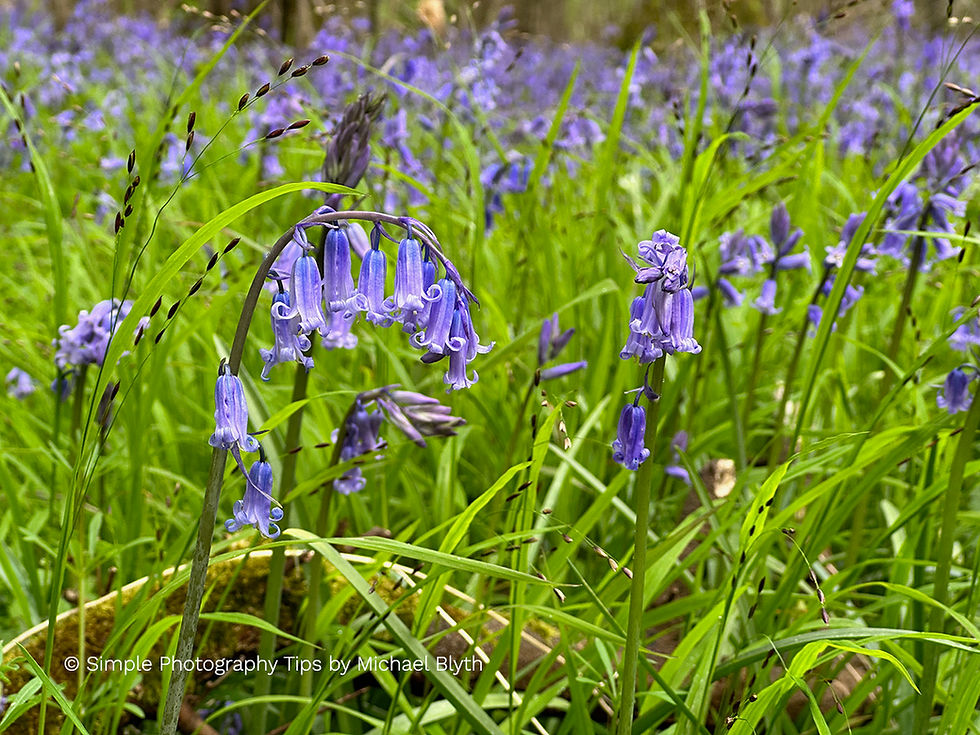
Image Five is in a sense a similar set up, except for photographic approach.
I've kept back a little so there is less frontal dominance, and although the foreground flowers are in focus, there is not the visual separation, and the grasses and sedge give a lesser blue dominance. The light at the top of the image gives the impression of distant sunlight, and adds overall depth to the image.
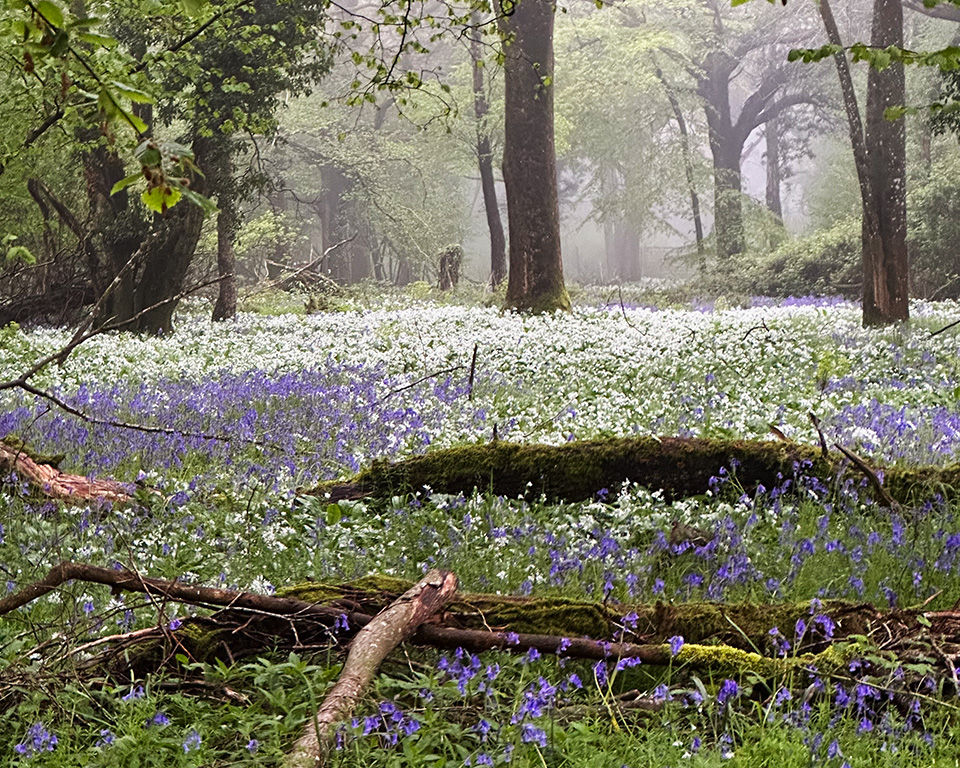
Image Six, the landscape version of an image used in a previous blog, shows the beauty of the two dominant flowers , in a delibrately unkempt setting, with yound beech leaves and gentle mist.
If you would like inspiration not only in photographing bluebells and other natural subjects more thoughtfully, but in recognising when to take the picture, when to leave it, and in seeing the small extras that can make or break a photograph, subscribe to Simple Photography Tips by Michael Blyth on this page. I’ll send you Wednesday’s practical posts and Friday’s reflective thoughts as they are published.
Comments