Simple Photography Tips – Seeing Artistic Potential in Everyday Objects

Five Simple Photography Tips for Quirky Art (Camera or Phone). In this post I share a few simple photography tips for finding unexpected art in everyday life; whether you’re using a camera or your phone.
Keep your eyes open! Let your imagination loose - Look beyond the obvious; sometimes the best subject hides in plain sight.
Choose a subject with a wide variety of possible images - Pick something that offers a range of textures, angles, and tones;it gives you more to play with.
Become aware of texture and light - Watch how light changes the surface and brings out details you might otherwise miss.
Check the depth of field - A shallow depth can isolate details beautifully.
Beware of direct sunlight - it can cause difficulties with exposure Bright light can create harsh contrasts and exposure issues. Soft or indirect light often works better.
It was raining steadily as we headed through the streets of Rotterdam, dodging puddles, sharing an umbrella.
Coming across a shop, First Served Vintage, offering, as the name suggested vintage clothing and other odds and ends.
The ladies went in search of items, while i wandered around.
Amongst the items was a fur and leather belt which was immediately of interest as I realised it would make a good example of an exercise you could do yourself, and became a spontaneous experiment in simple photography tips in action — letting the ordinary turn into something visually striking.
There are so many items around like this, with each of them, if you look long enough, and change your angle of view to allow the light to play differently, you will see a multitude of inviting images, pictures that would look great as modern art on your wall.
Let's go through of the twenty or so that I took. Each image records something different, patterns of texture, contrasts of pattern, light playing on different surfaces in different ways.
A beautiful belt used to inspire your perception.

The first image is there to show you the scene as I found it, and left it. The belt lying on the windowsill, easily overlooked with the larger brighter items of clothing in the shop, but full of texture.

There are three main textures with this rather quirky belt, providing visual and photographic interest - the brass occurs as the main and secondary buckle, and as studs.
The leather is in three groups, with differing texture.
And then there is the fur, in this case it is quite coarse, giving a very different texture from something like mink.
There are always questions asked about the use of animal products, but they are not for now. This item is from a period when thoughts were different, and is here as an example of creating photographic art and the inspiration to do so.
The second image, is an immediate zoom-in on the secondary brass buckle, nestled against the rather coarse fur. The texture of the fur and it's direction of lay, take the eye to the leather and brass, as does the strap.
The brass provides the real focal point of the image, it and the strap providing contrast with the direction and texture of the fur.

Image three shows the change that occurs from changing the angle of 'approach' the light coming through the nearby window provides a fascinating effect on the leather, and correct exposure on the studs makes them glow beautifully.
As a possible wall hanging, the smoothness of the window sill, and the whipped leather behind all play their part.

In the fourth image the brass buckle comes to the fore, the prong angled across the image adds strength to the image, and the circle of the buckle does likewise.
Notice the light from the sise adding further depth and contrast to the texture. If you're having a go, then either move the light source, or the item. Observe, and perhaps photograph the differences.
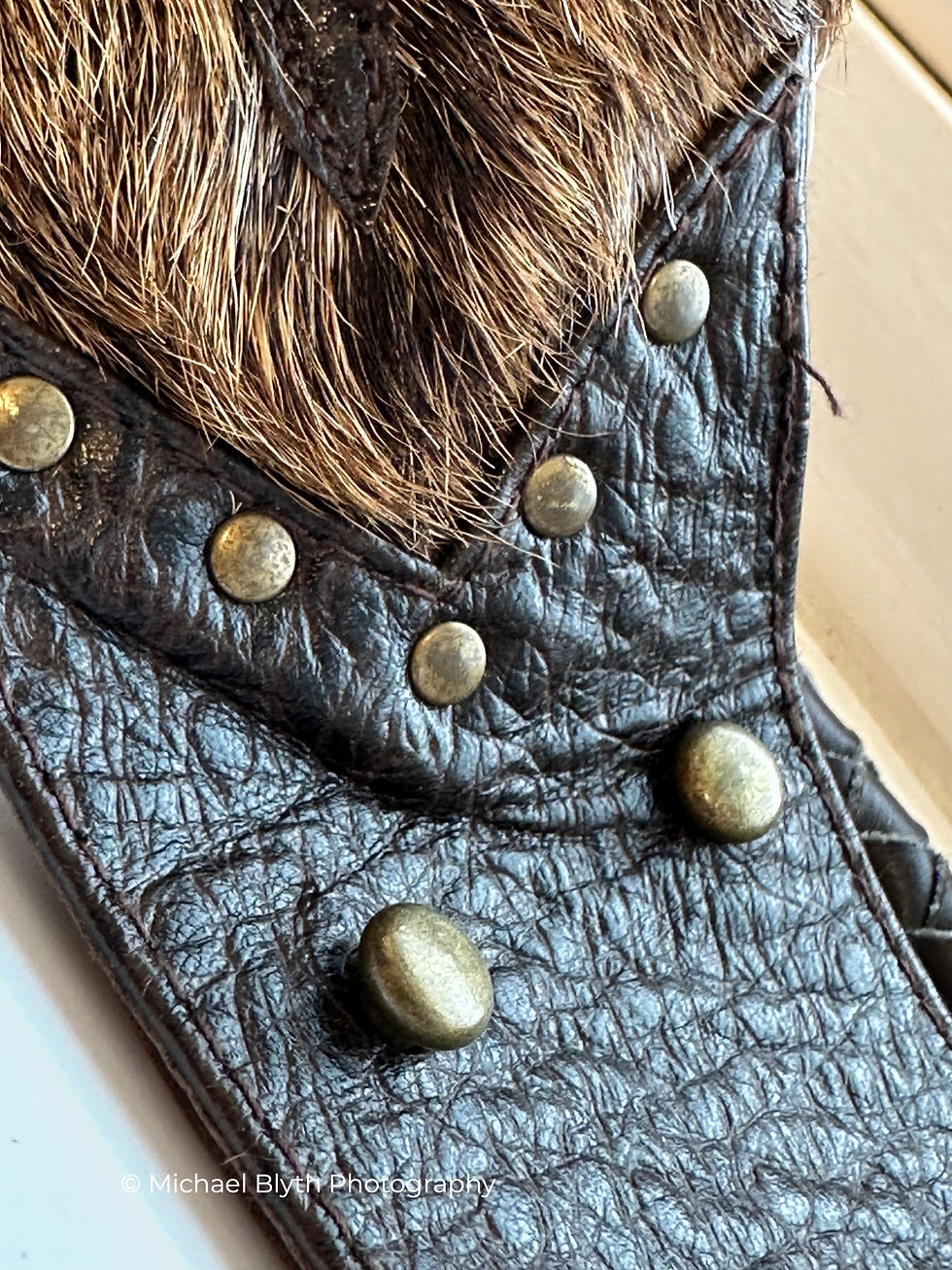
Image Five is another example of side-light changing the image - much of the leather is too bright to show the depth of colour, and the texture of the leather provides shadow and texture.
The placement of some of the studs is deliberately following the rule of thirds, , the angles of the leather edges, and the divergence of the fur provide a contrast and a challenge to the light on the leather below.
This was ten minutes in a shop while others grazed, if you're having a go, play more with the light and the textures, not forgetting the angles.
Just have fun, I hope this series inspires you to select the unusual as a photographic subject. One extra thing to note, this belt is a high quality item, good quality fittings and expensive leather - all that is apparent in the images that result - photographing poor quality materials inevitably produces cheap looking images.
I think the real benefit behind these simple photography tips isn’t technique, but patience, looking until you see, staying long enough for the ordinary to reveal the extraordinary.


Comments